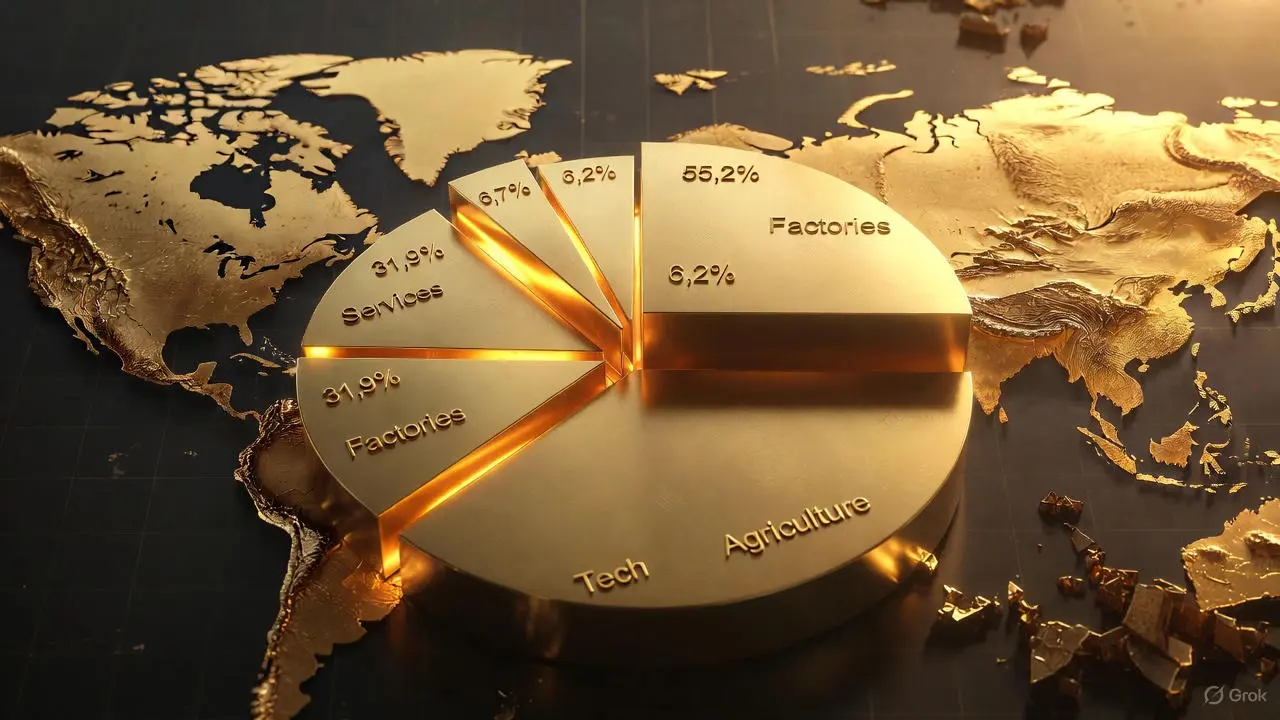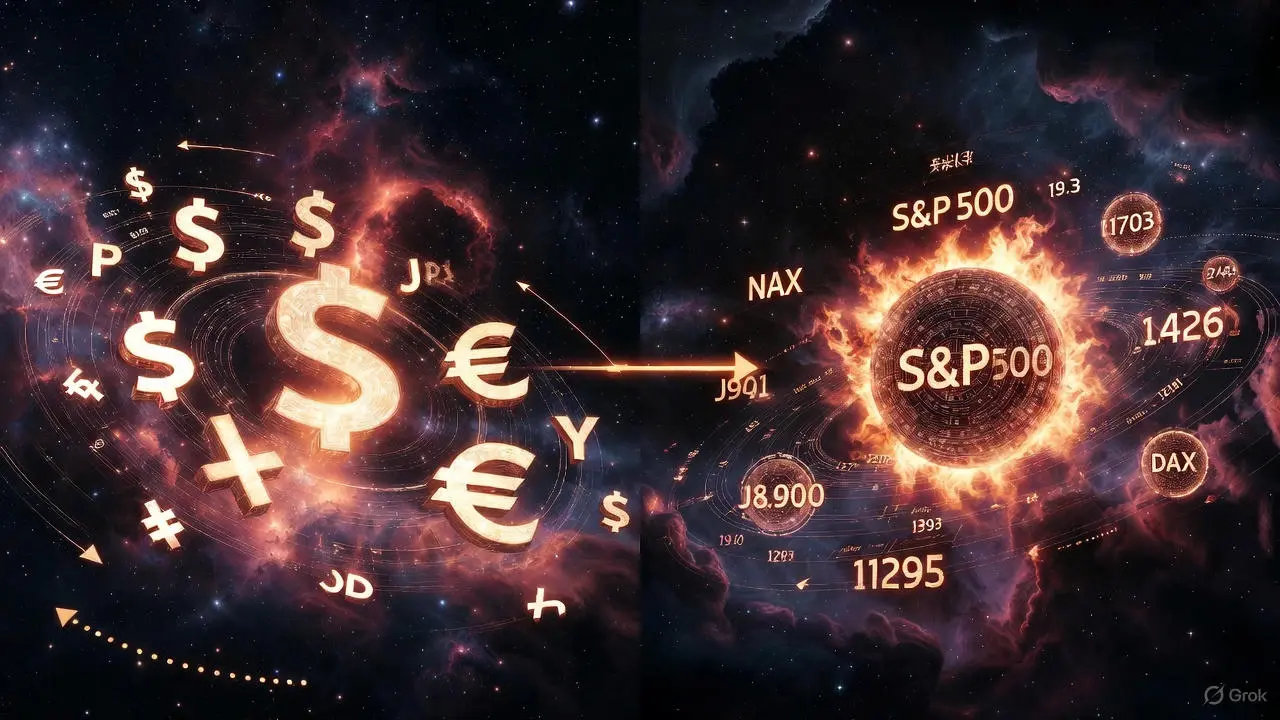
Two markets dominate global finance: the $7+ trillion-a-day foreign exchange market and the $100+ trillion stock market. Retail traders love to debate which is “better”, but institutions care about a deeper question—which one actually leads the other when big macro trends shift? The answer is not fixed; leadership changes with the economic cycle, yet clear patterns have emerged over decades. Understanding who leads and when gives professionals a genuine edge in timing risk-on/risk-off moves.
Historical Context & Evolution
For most of the 20th century, stock markets were the undisputed leader. The 1929 crash started in New York and crushed currencies later. The 1987 Black Monday began in equities and spilled everywhere. Currencies were either fixed or heavily managed, so they reacted rather than initiated.
Everything flipped after the Bretton Woods system collapsed in 1971 and floating exchange rates became the norm. By the 1997 Asian crisis, currency collapses were triggering stock crashes, not the other way around. The 2008 GFC started in US housing and stocks, but the violent dollar surge in late 2008 proved forex could amplify and extend equity pain dramatically.
Current Global Landscape
Today the forex market dwarfs equities in daily turnover and operates 24 hours across Tokyo, London, and New York. Major pairs—EUR/USD, USD/JPY, GBP/USD—move on central-bank expectations, interest-rate differentials, and safe-haven flows.
Stock markets remain the primary barometer of corporate health and growth expectations, but they have become heavily influenced by liquidity and currency translation effects. US indices dominate because the dollar is still the world’s funding and reserve currency, creating constant feedback loops between the two markets.
Key Drivers and Mechanics
Leadership switches in predictable ways across the cycle.
- Early recovery & bull markets → Stocks lead. Equity risk appetite returns first; capital flows into higher-yielding currencies later.
- Mid-cycle when growth peaks → Forex takes over. Interest-rate expectations and yield differentials drive currency strength before earnings slow.
- Late-cycle & risk-off → Forex leads violently. Safe-haven currencies (USD, JPY, CHF) surge as investors unwind carry trades and repatriate capital, crushing stocks.
- Crisis bottom → Stocks lead again. The first sustained equity bounce signals risk appetite is returning; high-beta currencies follow.
The dollar index (DXY) is the single best real-time indicator of this handover. A rising DXY almost always precedes or coincides with equity weakness; a falling DXY supports risk assets.
Regional Impact
US exceptionalism makes American stocks the global bellwether, but currency moves now determine how deep non-US bear markets become. Europe and Japan suffer double blows when their currencies weaken alongside falling equities.
Emerging markets are extreme versions: their currencies crash first on capital flight, dragging local stocks down even when global equities are stable. Commodity currencies (AUD, CAD, NZD) act as real-time proxies for global growth expectations and often move weeks before major stock indices.
Risks and Challenges
Misreading leadership is expensive. Traders who buy stocks because “the economy is fine” while the dollar is surging usually get destroyed. Conversely, shorting equities when the dollar is rolling over often fails badly.
Central-bank intervention and sudden geopolitical shocks can temporarily reverse the normal sequence. The Swiss National Bank’s 2015 franc unpeg and the 2020 pandemic dollar squeeze are classic examples where forex moved first and stocks followed with a lag of days or weeks.
Future Outlook
Three structural changes will keep forex-stock interplay central. Rising multipolarity means more currency volatility as reserve diversification accelerates. Digital assets and central-bank digital currencies may create new 24/7 forex-like markets that compete with traditional equities for leadership signals.
Passive investing and ETF dominance make stock markets more momentum-driven and therefore more reactive to liquidity and currency moves than in the past. The dollar’s role may gradually erode, but as long as it remains the primary funding currency, forex will retain its power to lead during risk-off phases.
Practical Implications for Investors and Businesses
Professionals never trade one market in isolation. Watch the dollar before everything else: a strongly rising DXY is a sell signal for global equities until proven otherwise. Falling DXY with rising stocks is the ideal risk-on environment.
Multinational companies must hedge currency exposure as aggressively as they manage equity portfolios. A 10 % adverse currency move can wipe out an entire year of operating profit. Retail traders do best treating forex as the macro compass and stocks as the confirmation tool rather than fighting the leadership pattern.
Conclusion
Neither market is permanently superior; each takes the lead at different, predictable phases of the global cycle. Stocks signal growth and risk appetite; forex reveals liquidity conditions and safe-haven demand. The institutions that consistently make money are the ones that respect this dance instead of picking sides. In today’s interconnected world, the trader who understands when forex leads and when stocks lead is the trader who survives every regime change.
FAQ
Q. Which market moves first in a bull market?
A. Stocks. Equity risk appetite returns before capital flows into higher-yielding currencies.
Q. Why does a strong dollar hurt stocks?
A. It tightens global liquidity, hurts emerging-market borrowers, and reduces translated earnings for US multinationals.
Q. Is USD/JPY the best forex-stock indicator?
A. Yes — it combines safe-haven flows, yield differentials, and Japanese portfolio flows into one clean pair.
Q. Can stocks rally while the dollar rises?
A. Rarely and briefly. Sustained dollar strength almost always caps equity upside.
Q. Which leads at market bottoms?
A. Stocks. The first sustained equity bounce tells currency traders that risk appetite is returning.
Q. Will crypto ever replace forex as the macro leader?
A. Unlikely as long as Bitcoin and others remain risk assets rather than funding or reserve currencies.